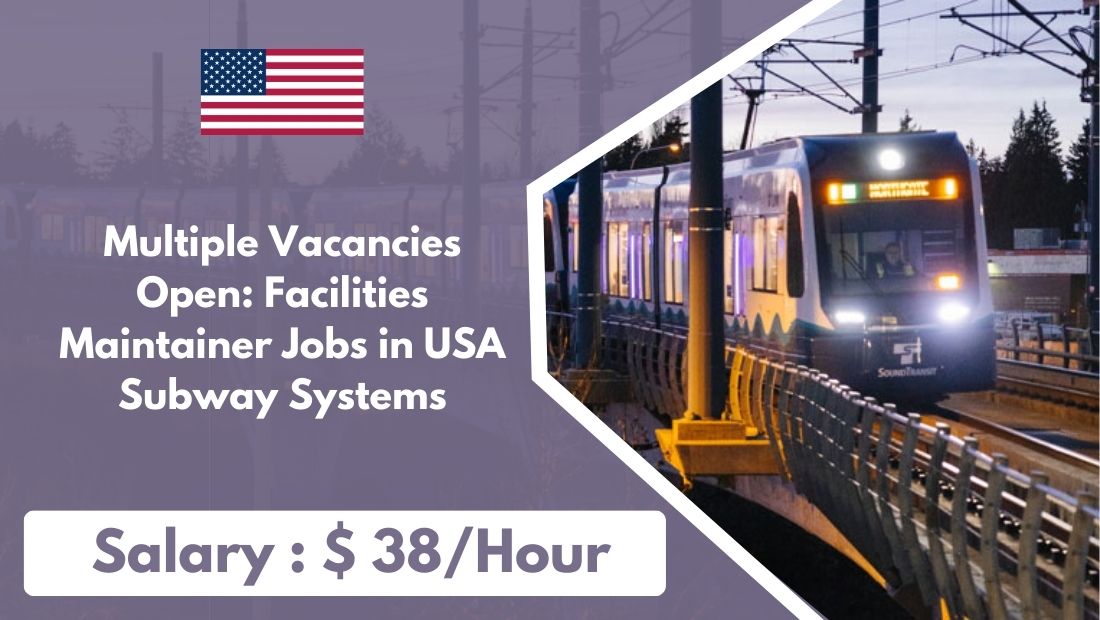
America’s subway networks move millions of passengers every single day, and it takes more than trains and tracks to keep them running smoothly. Behind the scenes, facilities maintainers play a vital role in making sure subway stations, tunnels, and infrastructure are safe, clean, and functional.
With ongoing expansions and upgrades in major cities like New York, Boston, Washington D.C., and Chicago, multiple vacancies are now available in Facilities Maintenance Departments across U.S. subways. For anyone seeking a reliable, hands-on career with strong pay and job security, this could be the right opportunity.
What Does a Subway Facilities Maintainer Do?
Facilities maintainers are responsible for the upkeep of subway stations, tunnels, depots, and supporting infrastructure. Their work ensures passengers experience safe and well-functioning facilities every time they use public transit.
Typical duties include:
- Repairing station fixtures, escalators, and elevators
- Maintaining electrical, plumbing, and ventilation systems
- Painting, welding, and carpentry work in stations and depots
- Inspecting and fixing lighting, seating, and signage
- Responding to emergency repairs in stations or tunnels
- Supporting capital improvement and renovation projects
- Ensuring safety compliance across facilities
This role requires both technical skill and physical stamina, as work often involves heavy tools, underground environments, and rotating shifts.
Why Choose a Facilities Maintainer Career?
Working as a facilities maintainer in U.S. subway systems comes with many advantages:
- Stable Employment – Subway systems are essential public services with continuous funding.
- Competitive Pay – Hourly wages and overtime add up to strong annual earnings.
- Varied Work – No two days are the same; workers handle electrical, mechanical, and structural tasks.
- Union Protection – Many subway jobs are unionized, offering job security and benefits.
- Growth Opportunities – Workers can advance into supervisory or specialized technical roles.
For those with trade skills or a background in maintenance, this career offers a steady and rewarding path.
Salary for Subway Facilities Maintainers in the USA
Salaries vary by city, experience, and union agreements, but average pay is strong compared to many other maintenance jobs.
| Job Role | Hourly Wage (USD) | Monthly Estimate (USD) | Annual Salary (USD) |
|---|---|---|---|
| Entry-Level Facilities Maintainer | $20 – $25 | $3,200 – $4,000 | $38,000 – $50,000 |
| Skilled Maintainer | $26 – $32 | $4,200 – $5,100 | $54,000 – $65,000 |
| Senior Maintainer | $33 – $38 | $5,300 – $6,100 | $68,000 – $78,000 |
| Facilities Supervisor | $39 – $45 | $6,200 – $7,200 | $80,000 – $94,000 |
Additional benefits often include health insurance, retirement plans, paid leave, and overtime opportunities.
Apply Here
Work Conditions
Like many subway jobs, facilities maintenance comes with specific work conditions:
- Shifts may include nights, weekends, and holidays
- Work often takes place underground or in crowded stations
- Use of heavy tools and machinery is common
- Safety training and compliance are mandatory
Despite the challenges, the combination of pay, security, and long-term stability makes this career attractive to thousands of workers.
Visa Sponsorship for International Workers
Many U.S. cities face labor shortages in skilled maintenance roles, creating opportunities for international applicants.
- H-2B Visa – Some contractors sponsor temporary workers for maintenance projects.
- Employer-Sponsored Work Permits – Transit agencies and large contractors may sponsor experienced technicians.
- Pathway to Permanent Residency – Skilled workers with long-term contracts may qualify for employment-based green cards.
Visa sponsorship is more common for applicants with proven experience in electrical, plumbing, or mechanical trades.
Skills and Qualifications Needed
While some entry-level roles are available, most facilities maintainer jobs require basic trade knowledge. Useful qualifications include:
- Electrical repair experience
- Plumbing or HVAC knowledge
- Carpentry, painting, or welding skills
- Ability to read technical manuals and follow safety procedures
- Physical strength and endurance for manual work
- Teamwork and communication skills
Many agencies provide on-the-job training, but candidates with prior trade certifications will have an advantage.
How to Apply for Facilities Maintainer Vacancies
The hiring process is fairly straightforward:
Step 1: Prepare Your Resume
Emphasize trade skills, maintenance work, or construction experience.
Step 2: Search Transit Authority Careers Pages
Most subway agencies list vacancies on official city or state websites. Examples include MTA (New York), MBTA (Boston), CTA (Chicago), WMATA (Washington D.C.), and BART (San Francisco).
Step 3: Submit Application Online
Expect to upload documents and answer eligibility questions.
Step 4: Pass Screening and Tests
Applicants may face written tests, physical ability exams, and drug/alcohol screenings.
Step 5: Complete Training
Successful hires usually undergo several weeks of training before starting field assignments.
Top Cities with Facilities Maintainer Vacancies
Facilities maintainer roles are most in demand in cities with large or aging subway systems:
- New York City (MTA) – Hundreds of stations and tunnels needing constant upkeep
- Boston (MBTA) – Regular expansion and renovation projects
- Washington D.C. (WMATA) – Ongoing system upgrades and modernization
- Chicago (CTA) – Continuous demand for maintenance of historic stations
- San Francisco Bay Area (BART) – Expanding network and modernization needs
These cities frequently post multiple vacancies due to the size and complexity of their transit systems.
Benefits of Working in Subway Facilities Maintenance
Beyond salary, workers often enjoy:
- Union representation and collective bargaining
- Retirement and pension plans
- Full medical and dental insurance
- Paid vacation and sick leave
- Overtime and shift differential pay
- Free or discounted transit passes
- Job security in a government-backed sector
Challenges to Expect
This career isn’t for everyone. Challenges include:
- Long shifts, including overnight schedules
- Physical demands and heavy labor
- Exposure to noise, dust, and underground conditions
- Strict safety standards and inspections
- Working in emergencies, such as after storms or equipment failures
Still, for those who value steady pay and practical work, these challenges are outweighed by the benefits.
Who Should Apply?
These jobs are well-suited to:
- Tradespeople with electrical, plumbing, or HVAC skills
- Construction and maintenance workers seeking stable employment
- Entry-level applicants willing to learn and train
- International candidates with relevant technical backgrounds
- Workers seeking union-backed benefits and long-term security
Final Thoughts
With multiple vacancies in the Facilities Maintainer departments of U.S. subways, now is the time to apply if you’re interested in a stable, practical, and well-paid career.
Whether you’re an experienced tradesperson or someone looking to break into transportation maintenance, this role offers more than just a paycheck. It provides job security, union protection, and a chance to be part of the backbone of America’s public transit systems.
For international workers, visa sponsorship opportunities exist in cities facing labor shortages, making this a realistic career path abroad as well.
If you’re ready to start, check the official transit authority websites in your city of interest, prepare your resume, and apply today. A career as a Subway Facilities Maintainer could be your ticket to a stable future in the USA.